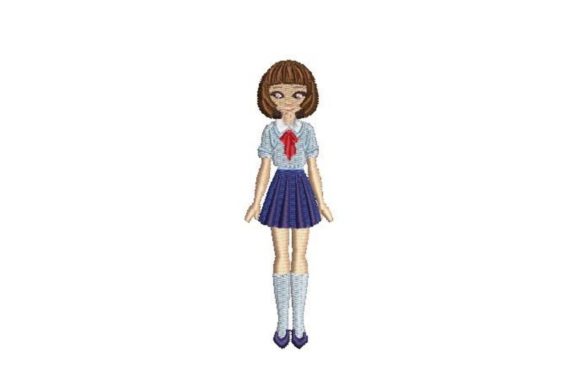
Japanese School Girl Embroidery Design Review
First Impressions: Cute, Classic, and Ready for School Projects
The Japanese School Girl design immediately catches the eye with its charming, youthful energy. It’s a sweet, recognizable motif that feels perfect for the back-to-school season. The character is styled in a traditional Japanese school uniform, giving it a distinct cultural flair without being overly specific. From a design standpoint, it strikes a nice balance between detail and simplicity—there’s enough visual interest to draw attention, but not so much that it becomes overwhelming or hard to stitch cleanly.
As an embroidery designer, I immediately thought of tote bags, lunch sacks, and little girls' backpacks. It's the kind of design that feels like it belongs on a personalized school accessory, something a parent would love to gift their child for the first day of school.
Real-Life Use: Where Japanese School Girl Shines
I recently tested this design on a custom embroidered tote bag for a client looking for a boutique-style back-to-school gift. The result was surprisingly clean and charming. The uniform lines stitched well, and the facial details held up nicely, even on a mid-weight cotton canvas. It also looked great on a sample sweatshirt swatch—soft enough to feel youthful, but not too childish for older kids or teens.
For small shop owners or Etsy sellers, this design could easily be adapted to a variety of handmade products. Think baby onesies, embroidered patches, or even personalized pillow covers for a nursery. It’s versatile enough to be used in both personalized gifts and commercial embroidery projects, especially around the back-to-school season.
Performance on Different Fabrics and Garments
One of the first things I checked was how the design held up on different fabric types. On a smooth cotton blend, the stitch density felt balanced—no puckering or distortion. However, when I tested it on a stretchy knit fabric, I noticed a slight pull around the edges of the uniform skirt. That’s a red flag for anyone planning to use it on t-shirts or baby clothes. A good stabilizer is definitely a must here.
It also performed well on a curved surface like a cap, though the facial features lost a bit of crispness. If you're planning to use it on a hat embroidery project, make sure to test it first on a cap blank. The same goes for applique designs or layered garments where fabric thickness might affect stitch clarity.
Where to Be Cautious
This design has a few delicate areas—especially in the facial features and the folds of the uniform. On a small hoop size, some of those details may get lost or merge together. I wouldn’t recommend it for very tiny embroidery work unless you're okay with a simplified look.
Dark fabrics also posed a challenge. The lighter thread colors in the face and uniform didn’t stand out as clearly as I’d hoped. It’s a good idea to test thread color contrast before stitching on darker backgrounds. If you're creating a printable mockup or a digital embroidery file preview, consider offering light and dark fabric variations to help buyers visualize the final product better.
Design Impact: Visual Appeal and Customer Perception
From a product design standpoint, the Japanese School Girl adds a strong emotional hook. It’s cute, recognizable, and tells a story—something that increases giftability and customer trust. For craft business owners, that’s gold. It’s the kind of design that can elevate a simple tote bag or baby blanket into a keepsake item.
That said, it does require a bit of design finesse to use well. If stitched poorly or on the wrong fabric, it can look amateurish. But when done right, it enhances the professionalism of your finished product and helps build brand consistency if you're using it across multiple items.
Designer Notes: What to Check Before You Stitch
- Test on scrap fabric first—especially if you're using a textured or stretchy material.
- Review stitch density to avoid puckering on thinner fabrics.
- Check hoop size carefully—some small hoops may compress the design too much.
- Inspect small details like the eyes and buttons to make sure they stitch cleanly.
- Use the right stabilizer—especially for stretchy or layered garments.
- Confirm licensing if you're planning to sell the finished product or offer it as a digital embroidery file.
I also recommend testing it in black and white mockups to see how the form holds up without color. It’s a great way to assess whether the design will translate well across different thread color palettes and fabric types.
Final Thoughts: A Sweet Design with Real Potential
The Japanese School Girl is more than just a cute motif—it’s a practical design with a lot of commercial potential. Whether you're creating custom apparel, holiday embroidery, or personalized gifts, this design can help you connect with customers looking for something playful, nostalgic, and meaningful.
Just remember to approach it with care. Like any machine embroidery design, its success depends on thoughtful execution. Test it thoroughly, consider your fabric choices, and think about how it fits into your overall product lineup. Do that, and you’ll find it’s a strong contender for your next craft fair product or small shop item.